Planting Design
Are you interested in enjoying and leaving a legacy of robust trees, rich topsoil and a thriving ecosystem? If so, please consider landscaping using permaculture methods, one that is custom-tailored to your natural site features and the ecology of southwest Michigan. Increase your knowledge, food sovereignty and beautify your site in phases with a professional planting consultation and a maintenance plan.
The Process
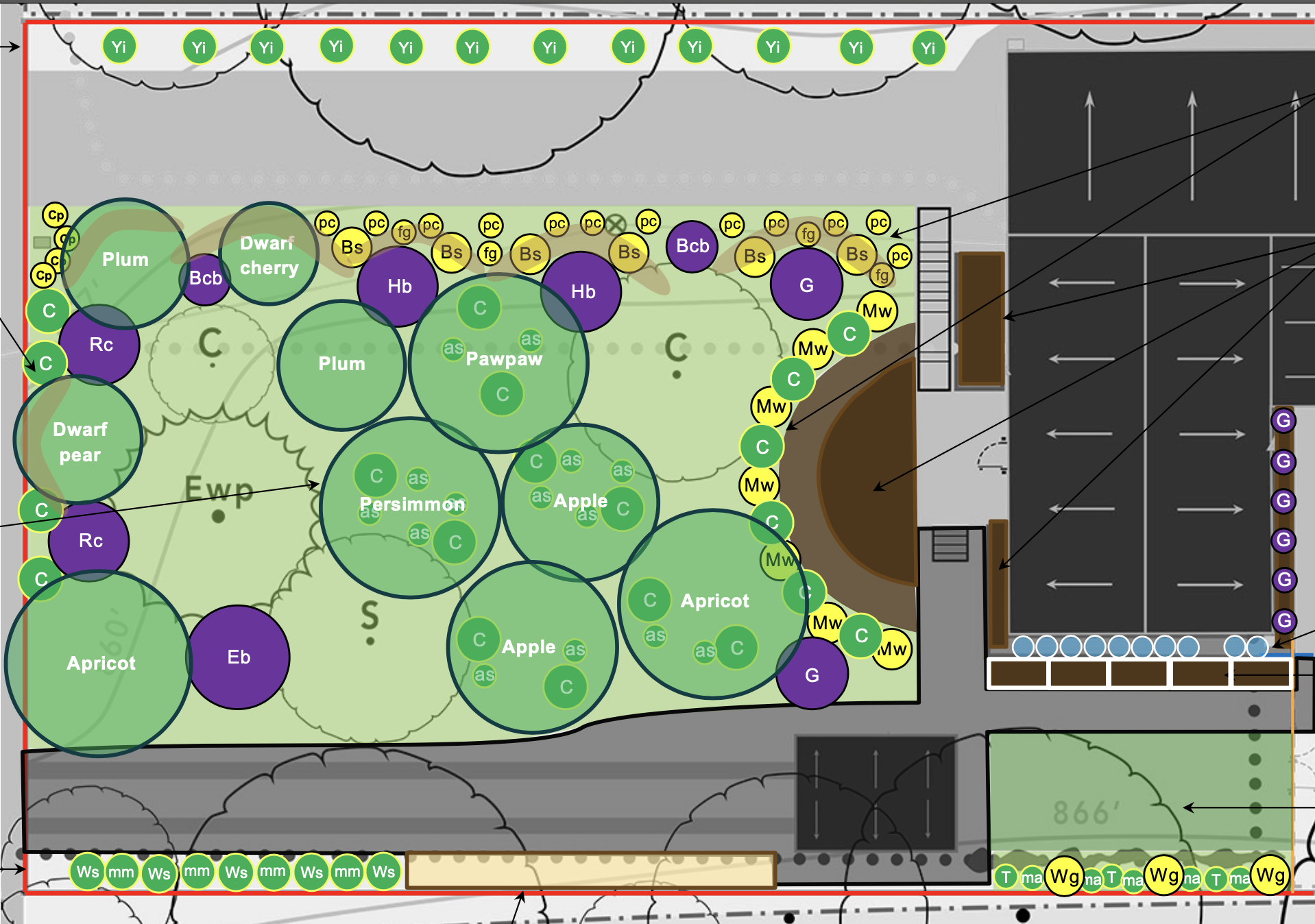
Get professional input on the what, when where and how of tree planting.
Site and species selection are crucial to creating a thriving landscape. Using permaculture principles, these planting layouts aim to maximize ecological function while minimizing inputs of time and resources. The design process involves two stages, a site assessment and design render. Project cost will vary depending on site size and complexity. Tree species are generally native and often readily available from local growers and nurseries.
Site Assessment: This includes a walkthrough of the site, note taking and observations about layout and existing vegetation, soil sampling, and questions about the site history. Much can be gleaned from a site assessment.
Design Render: For folks wanting to take the next step, the process then moves into a formal design. This is when we get clear on your goals and motivation, as well as what is possible on the site. Layouts are done on Google Earth, where recommended earthworks and tree locations are laid onto a satellite image. Using cloud software makes it easy to communicate and make changes throughout the process. This design is a useful reference for DIYers or landscaping companies.
What is Permaculture?
Permaculture, as defined by the Permaculture Institute of North America, is a global social movement centered around the grassroots training of a system of holistic ecological design. It aims to improve the lives of all people while conserving and regenerating ecosystems everywhere. The design system makes use of locational values, ecosystem models, and patterns in nature. It draws on traditional knowledge and modern science. Permaculture is also a personal practice of applying permaculture ethics and principles to one’s life, while exploring and sharing empirical findings about the natural and human worlds.